
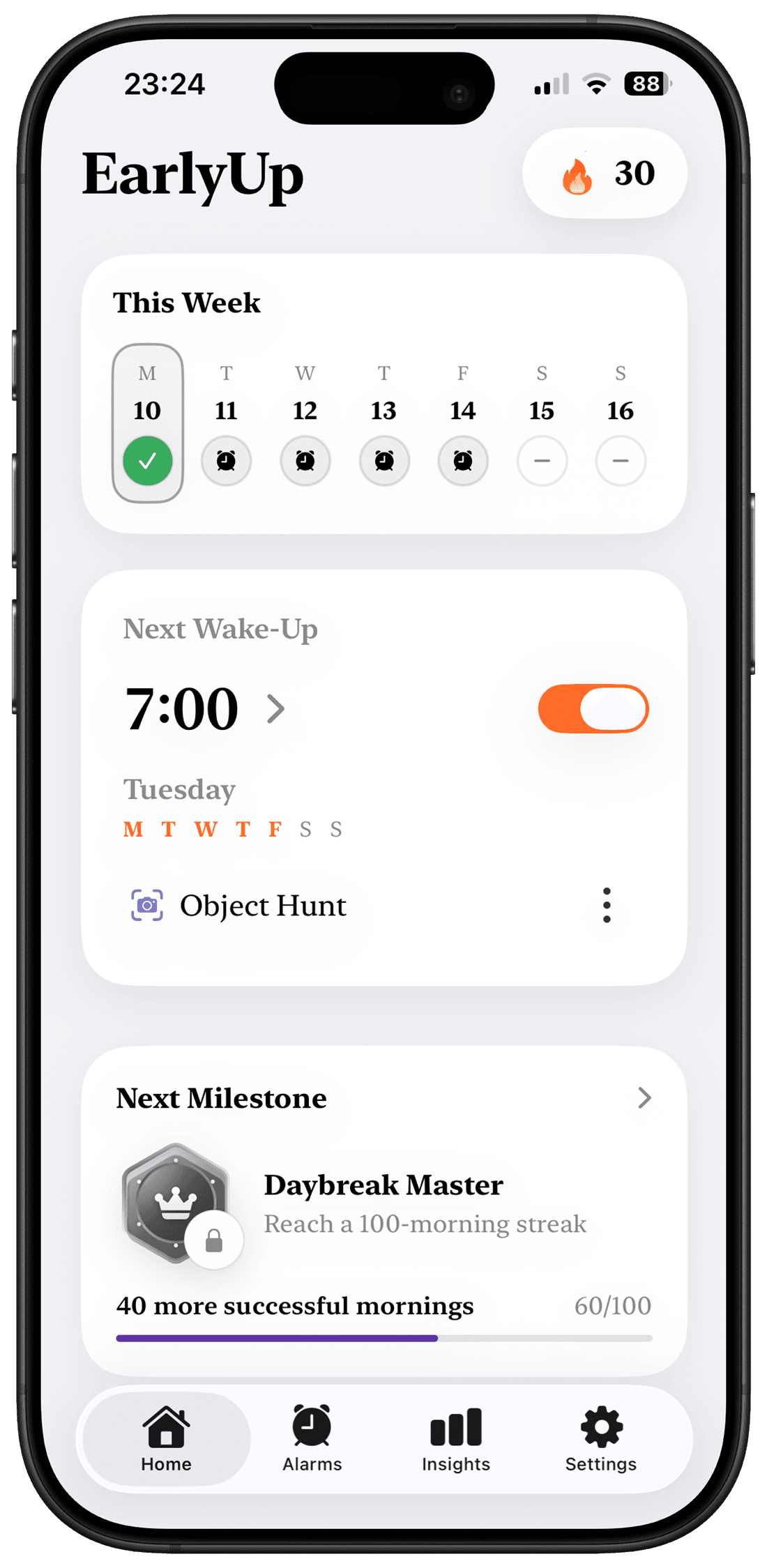
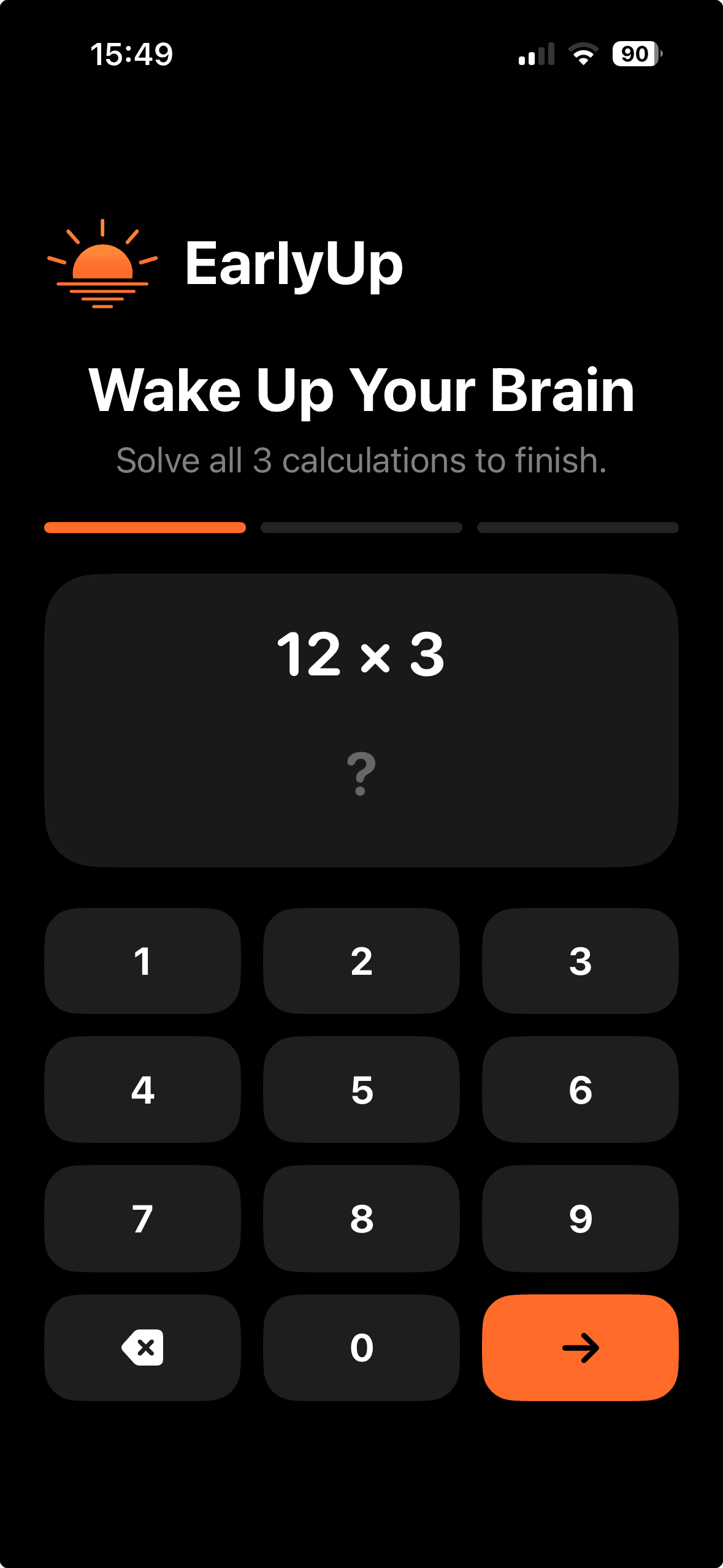
Start by looking beyond the alarm volume. Give yourself enough time to sleep, keep your wake time steady, and check the alarm setup while you are fully awake. Then add a small action that is difficult to complete from bed. Keep the same setup for a week so you can tell whether it is actually helping.
Missing an occasional alarm after a late night is not unusual. If it happens regularly, look at three things. You may need more sleep. The alarm may not be reaching you reliably. Your morning routine may also make it too easy to switch off the sound and go back to sleep.
Why you can sleep through an alarm
You may not be getting enough sleep
Most adults need at least seven hours of sleep, although the amount varies between people. When your alarm cuts into sleep your body still needs, getting up can feel almost impossible. Before buying another alarm or adding more sounds, look honestly at how much time you are giving yourself to sleep.
Sleep inertia can make you act before you are fully alert
Sleep inertia is the groggy transition after waking. A review of the research found that impairment can last for tens of minutes, with full recovery taking longer in some situations. During that window, a familiar swipe or button press can happen almost automatically, particularly when the phone is already beside your hand.
Your alarm system may have become easy to ignore
Setting ten alarms can give you ten chances to switch them off. If every alarm can be silenced from the same position, it may do little to stop you falling back asleep. What helps is a dependable signal followed by a simple action that gets you moving.
Seven practical changes to try
Protect enough time for sleep
Start with your required wake time and count backwards. Include the time it usually takes you to settle and fall asleep. Simply getting into bed does not mean you are sleeping. If your schedule allows only five hours, changing the alarm sound is unlikely to solve the problem.
Keep one consistent wake time
A broadly consistent sleep and wake schedule helps your body anticipate morning. The CDC recommends going to bed and getting up at the same time each day. You do not need perfection, but large swings between workdays and weekends make the next early morning harder.
Test the alarm while you are awake
Check volume, sound, charging, Focus settings, connected audio devices, and the app permissions your alarm depends on. Run a short test before bed. This separates a technical failure from a waking problem and removes avoidable doubt.
Make dismissal require deliberate action
Put distance between waking and returning to sleep. That might mean placing the phone where you must sit up, or using an alarm mission that asks you to solve, find, photograph, or complete something. The action should be short enough to do every day but clear enough that it cannot be mistaken for an accidental tap before you are fully awake.
Choose a mission that matches your failure mode
If your hands move before your brain, try a short maths or memory task. If you dismiss the alarm and lie down again, use an object or camera task that takes you away from bed. If you need movement, choose a brief physical mission. The task needs to be safe, practical, and realistic enough to complete every morning. If the missing memory is the part that concerns you, read our guide to turning off an alarm without remembering.
Add light and movement immediately
Open the curtains, switch on a bright room light, stand up, and begin the next tiny action in your routine. Daytime light and regular activity support healthy sleep patterns. They also make it less likely that you will get back under the duvet and fall asleep again.
Run the same setup for seven mornings
Track bedtime, estimated sleep, whether you heard the alarm, which action you completed, and whether you returned to bed. After a week, change one weak point. A repeatable system teaches you more than a new alarm sound every night.
What about the snooze button?
Research on snoozing is mixed. One small laboratory study of ten people found that repeated snoozing prolonged light sleep and sleep inertia. Another study followed 31 people who regularly used snooze. A 30 minute snooze period improved or did not affect their immediate cognitive performance, while reducing total sleep by about six minutes on average.
Both studies are small, so they cannot provide a rule for everyone. Pay attention to what happens in your own routine. If snoozing regularly turns into oversleeping, set a realistic wake time and connect the alarm to one clear action. If a short snooze works without making you late or more tired, current research does not show that you have to stop using it.
When sleeping through alarms deserves medical attention
An alarm strategy cannot diagnose or treat a sleep disorder. Speak to a healthcare professional if you regularly cannot wake even when you allow enough time for sleep. You should also seek advice if you experience significant daytime sleepiness.
The NHS advises speaking to a GP about possible sleep apnoea if you have symptoms such as loud snoring, breathing that stops and starts, gasping or choking during sleep, frequent waking, morning headaches, or difficulty concentrating. Ask someone who sees you sleep whether they have noticed these signs.
If you must wake for medication, caring responsibilities, or work where waking on time is essential, do not rely on a single untested device. Use an appropriate backup plan and seek professional advice if waking remains unreliable.
Common questions
Why do I not hear my alarm?
Common possibilities include insufficient sleep, waking from a deeper stage of sleep, low or redirected audio, a technical setup problem, or dismissing the alarm during sleep inertia. Test the device while awake, then review your sleep opportunity and wake routine.
Is there a best alarm sound for heavy sleepers?
Research has not established one best sound for all adults. A systematic review found insufficient evidence for firm conclusions, although melodic or preferred sounds may be worth investigating. Choose a clear sound you can hear reliably, test it, and focus on what you must do after it begins.
How many alarms should I set?
Research does not give us one number that works for everyone. A backup can be sensible, but a long chain of alarms gives you more opportunities to dismiss them before you are fully awake. Start with one reliable alarm, add a considered backup where needed, and use an action that you cannot complete accidentally.
Sources and further reading
- CDC: About Sleep and Your Heart Health
- CDC/NIOSH: Improve Sleep
- Sleep inertia: current insights
- Effects of using a snooze alarm on sleep inertia after morning awakening
- Is snoozing losing? Why intermittent morning alarms are used and how they affect sleep, cognition, cortisol, and mood
- Auditory countermeasures for sleep inertia: a systematic review
- NHS: Sleep apnoea
This guide provides general information and should not replace medical advice. We checked it against the sources above on 24 August 2026.